





What Temperature Should You Set Your Air Conditioner During a Brisbane Summer?
Posted on July 28th, 2026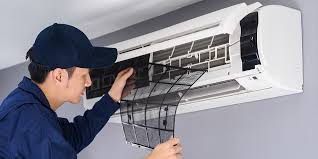
One of the most asked questions Brisbane homeowners have about their air conditioning isn’t about installation or repairs — it’s about the remote control. Specifically, what temperature should you actually be setting it to? It’s a question that has real financial consequences, because every degree you drop below the optimal range adds measurably to your running costs. At Alfa Air & Electrical, we give every client guidance on this during service visits because the settings you choose have a bigger impact than most people realise.
The Recommended Cooling Temperature for Brisbane Homes
For cooling in summer, the widely recommended target range is 24 to 26 degrees Celsius. At 24 degrees, most people in a typical Brisbane home are comfortable, and the system isn’t working excessively hard to maintain that temperature against the outdoor heat. At 26 degrees, the system works even less and uses noticeably less electricity, though some people find this slightly warm during the hottest part of the day.
The Energy Rating Advisory Committee and energy efficiency bodies consistently point to 24 to 26 degrees as the optimal range for cooling in Australian conditions. Every degree you lower below this range adds approximately 10% to your air conditioning running costs. If you’re setting your system to 20 degrees on a 34-degree Brisbane day, you’re paying significantly more for a marginal comfort gain that your body would likely adapt to within a few minutes at 24 degrees anyway.
Why Humidity Matters as Much as Temperature in Brisbane
Brisbane’s subtropical climate means high humidity is often a bigger comfort issue than raw temperature. Air conditioning systems remove moisture from the air as part of the cooling process, which is why even a room set to 24 degrees feels significantly more comfortable when the air conditioning has been running than the same temperature on a humid day without it.
The practical implication is that in high-humidity conditions, setting your system slightly higher — say 25 to 26 degrees — while running it continuously will often make you feel more comfortable than cycling it on and off at a lower set point. The continuous dehumidification keeps the air from feeling sticky and oppressive even when the temperature is slightly higher than you might otherwise choose.
Sleeping Temperature: What Works Best for Brisbane
Sleep quality is affected by ambient temperature. Most sleep research suggests the optimal sleeping environment is between 18 and 22 degrees, which is cooler than the recommended daytime range. However, in Brisbane’s climate, running your air conditioner at 18 or 19 degrees overnight is expensive, unnecessary, and often counterproductive: the very cold air from a low set point can cause you to wake up feeling cold in the early hours of the morning when outdoor temperatures drop.
A more practical approach for Brisbane sleeping conditions is to set the system to 22 to 24 degrees, use the timer to turn it off two to three hours after you fall asleep, and set it to restart about an hour before you wake up. The house retains conditioned temperature well for a couple of hours after the system shuts off, meaning you stay comfortable through most of the night without paying to run the system continuously from midnight to 6am when outdoor temperatures have often dropped enough that the system would be working very little anyway.
The Cost Difference Between Temperature Settings
To put this in concrete terms: a split system air conditioner rated at 3.5 kW running at 20 degrees on a hot Brisbane day might draw 1.2 to 1.5 kW of electrical power continuously. The same unit maintaining 24 degrees might draw 0.6 to 0.8 kW under moderate conditions. Over a twelve-hour summer day, the difference in electricity consumption is significant. Over a three-month Brisbane summer, that gap adds up to a meaningful difference on your annual energy bill. The 24-degree household is spending a fraction of what the 20-degree household is spending, and in most cases, neither occupant could tell you exactly why one feels so much more comfortable than the other if you put them in each other’s homes.
Fan Speed Settings and Their Effect
Fan speed affects both comfort and efficiency. Running the fan on auto mode allows the system to adjust fan speed based on how hard it needs to work, which is generally the most efficient approach. Running the fan constantly at high speed when the system doesn’t need to work hard wastes energy and can actually make the room feel less comfortable, as very high airflow creates a wind-chill sensation that’s not always pleasant.
For most normal residential use in Brisbane, auto or medium fan speed is the right choice during the day. Use high fan speed when you first turn the system on to bring the room temperature down quickly, then allow the system to step back to a lower setting once the target temperature is reached.
Zoning: The Smartest Tool in a Ducted System
If you have a ducted air conditioning system with zone control, using the zones correctly is more impactful on your electricity bill than the set temperature itself. Only condition the rooms that are occupied. If the bedrooms are closed and empty during the day, close those zones. If you’re entertaining in the living area and kitchen, open those zones and keep the bedroom zones closed.
A zoned ducted system conditioning 60% of the home uses significantly less energy than one conditioning every room simultaneously. This is where the true efficiency advantage of a properly designed residential air conditioning ducted system lies — not in any single temperature setting, but in the flexibility to direct conditioned air only where it’s actually needed.
Keep Your System in Condition to Hold Its Set Temperature
All of the above advice only applies to a system that’s in good working order. A unit with dirty coils, low refrigerant, or blocked filters has to work much harder to maintain any set temperature, and may fail to hold the set point even when running continuously. This is why annual servicing before the Brisbane summer is the most important single thing you can do for both comfort and efficiency. Contact Alfa Air & Electrical to book a service and make sure your system is ready to hold that 24-degree set point efficiently through whatever Brisbane’s summer throws at it.